
A Day at Uday
“Rhythm and repetition is a foundation pillar in Waldorf pedagogy, given its strong impact in the development of every child.”
A day at Uday Waldorf Inspired School is not a rigid schedule; it is a carefully calibrated in-breath and out-breath—a rhythm that nourishes the child’s entire being. This structure, which is gently adjusted for seasonal needs, ensures our education is truly guided by ‘Salutogenesis’ (the focus on factors that support human health and well-being), as described by Dr. Michaela Glöckler.
Parents often ask, “What does my child actually do all day?” Here is a glimpse into the flow of learning, where every activity serves a purpose:
The Kindergarten Journey (Ages 3-6):
The Rhythmic Flow
To an outsider observing our Kindergarten, it may look simply like play—and that is intentional! The entire morning is dedicated to activities that engage the child’s Will (Hands) and their Feeling (Heart), building the foundational capacities for future intellect.
A Typical Kindergarten Day (Following the Summer Rhythm Example)
| Time Slot | Activity Type | Pedagogical Purpose | |||
|---|---|---|---|---|---|
|
8:50 – 9:55 |
Arrival & Outdoor Play (In-breath) |
Deep engagement of the senses and the will; large motor skill development. |
|||
|
10:00 – 10:20 |
Fruit Time (Out-breath) |
Developing quiet concentration and social grace. |
|||
|
10:25 – 10:55 |
Morning Circle (In-breath) |
Movement, singing, and rhythmic recitation to harmonize the body and prepare the soul. |
|||
|
11:00 – 11:30 |
Developmental & Core Activities |
Focused Will Work: Handwork, Cooking activities (e.g., shelling peas, grating beetroot), Wet-on-Wet painting, Yoga poses, Rolling/Tumbling, Catch/Throw bean bags. |
|||
|
11:35 – 12:00 |
Lunch (Out-breath) |
Community building and nourishment. |
|||
|
12:00 – 12:30 |
Indoor Play (In-breath) |
Free, imaginative play that strengthens creative thinking. |
|||
|
1:15 – 1:30 |
Story & Departure (Out-breath) |
Nurturing the inner life through reverence and imagination. |
Developmental Activities focus on grounding the body and cross-lateral movement. Core Activities (like cooking, handwork, and wet-on-wet painting) involve practical skills and sensorial refinement.
The Primary & Middle School Day: the block rhythm
In the Grades, the day is structured around the Block Teaching Method, ensuring deep, unhurried immersion in academic subjects.
Every grade—from primary to middle school—begins with the signature Waldorf routine known as the Morning Circle (or Rhythmic Work in higher grades). Children come together to say their morning verse, sing, practice recorder music, or do timed math tables through bean bag movements, rhythmically preparing their entire system to receive the day’s content.
The Flow of the Grade School Day (Grades 1-8)
| Time Slot | Activity Focus | Key Pedagogical Principle | |||
|---|---|---|---|---|---|
|
8:45 – 10:20 |
Main Lesson Block (In-breath) |
Intense Focus: 90 minutes dedicated to a single subject (Math, History, English, Science) for 3-4 weeks. Concepts are engaged extensively through stories, artwork, and physical experiences. |
|||
|
10:20 – 11:00 |
Practice Block 1 (Out-breath) |
Review, skill practice (e.g., dictation, grammar, or foreign language). |
|||
|
11:00 – 11:20 |
Fruit Break & Movement (In-breath) |
Nourishment and movement break to reset the body. |
|||
|
11:20 – 12:00 |
Practice Block 2 (Out-breath) |
Further skill work or review. |
|||
|
12:40 – 2:00 |
Artistic & Movement Elements |
Integration: Dedicated time for Artistic Element/Sports, Music (recorder/ukulele), Dance, or German—the tools that impart skills for academic success. |
|||
|
2:00 – 2:15 |
Closing (Out-breath) |
Children write diaries, clean, organize the class, say their closing verse, and depart for the warm food awaiting them at home. |
What You Might See in Our Classrooms:
Primary Grades
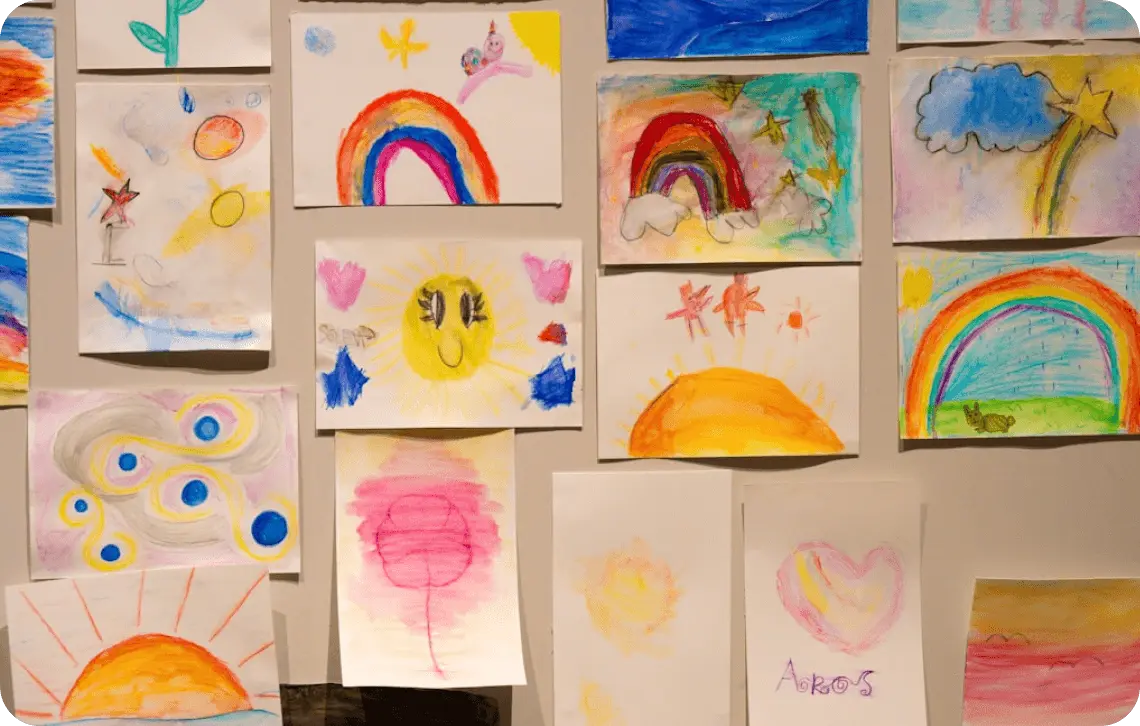
You’ll see children doing artwork based on stories (the foundation of literacy, numeracy and concepts), playing vowel sound games with movement, and working with tangible objects like pistachio shells for counting or finding factors—math anchored in reality! The gentle sound of singing and knitting/crocheting weaves through the day.
Middle Schoolers
You might catch them trying to burn stuff! Jokes apart, you would see them experimenting to observe flame characteristics when different materials are burnt for their science block, or making posters advertising their entrepreneurial venture launch—learning physics and economics through direct experience and practical application.
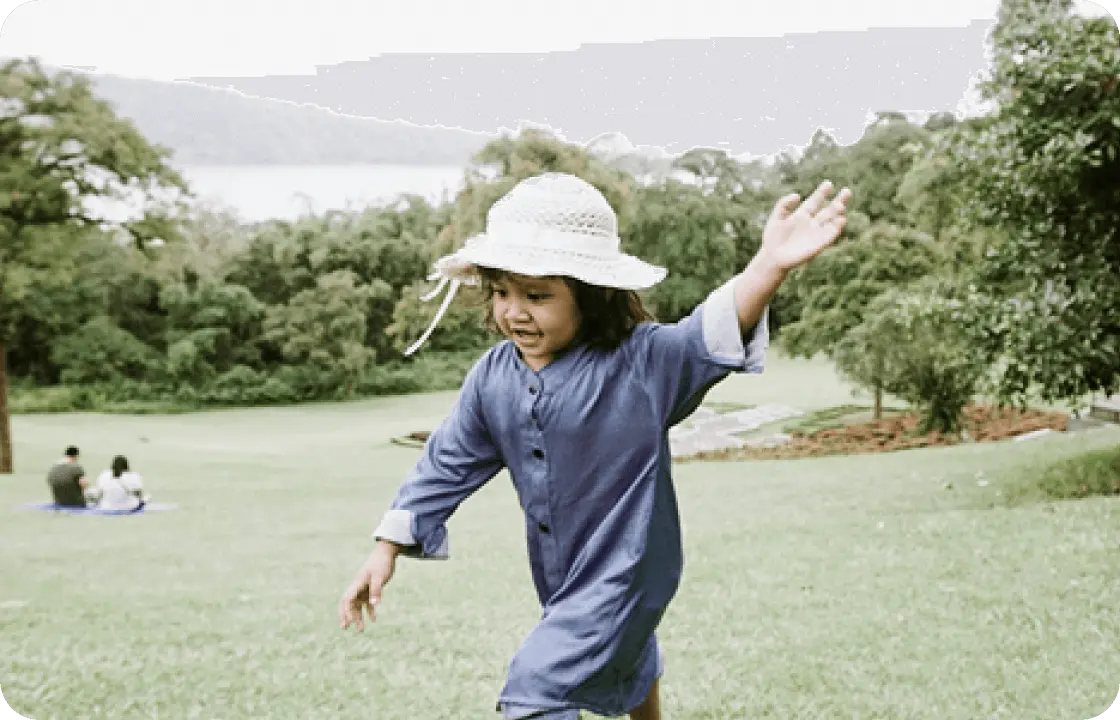
This unique rhythm allows learning to flow gracefully, nourishing the Head, Heart, and Hands equally every single day.
The Uday Difference: Beyond Holistic, Towards Alignment
In an age where every institution strives to offer ‘holistic education,’ the true difference lies in the definition of wholesome and the commitment to aligning every stakeholder to that vision. At Uday Waldorf Inspired School, we don’t just teach the child; we nourish the entire family ecosystem.
Choosing Uday means choosing a commitment to childhood itself—an unhurried, protected, and deeply meaningful journey defined by love, trust, and shared purpose.
The Core Differentiator: Philosophical Alignment
We aim to ensure philosophical alignment that prevents chaos and strengthens the child’s inner world.
The Uday Standard
Our philosophy, guided by the Head, Heart, and Hands framework, ensures the child’s thinking, feeling, and willing capacities are nurtured equally. When there is a gap between the school’s ethos and the home environment, the child is depleted. We ensure we are all on the same page.
Alignment, Not Conversion
We hold Parent Orientation Programs at regular intervals. The goal is simple: Alignment over Conversion. We transparently share what Waldorf education is, how Uday brings its unique local flavor to the pedagogy, how we align with the local and national board requirements; what lies ahead for a Uday graduate; clarify common myths, and understand the needs of our parent community. When this foundational step is strong, the road ahead for the child is smooth and meaningful.
This unique rhythm allows learning to flow gracefully, nourishing the Head, Heart, and Hands equally every single day.
Signature Programs: Cultivating Inner Strength and Ownership
We weave intentional programs into our timetable to equip children with skills for life in the modern world:
| Program | Focus Area | Starting Grade | The Impact on the Child | ||||
|---|---|---|---|---|---|---|---|
|
SEL (Social & Emotional Learning) |
Inner Voice, Conflict Management, Healthy Processing. |
Grade 3 |
Imparts the crucial skill to listen to their inner voice, process complex emotions healthily, and navigate social relationships with empathy. |
||||
|
SDL (Self-Directed Learning) |
Ownership of Learning, Reflection, Proactive Choice. |
Grade 5 |
Fosters the capacity for our senior children to take complete ownership of their academic journey. They reflect on their expertise in concepts, choose learning paths, and proactively work with teachers, transforming them from passive receivers to active creators of their learning journey. |
Nurturing the extended Family:Trust beyond the classroom
We intentionally create opportunities for deep community connection, ensuring every child has multiple trusted adults:
Peer Cohorts
Children from Grades 4–7 meet weekly with a dedicated teacher mentor in mixed-age groups. This provides a beautiful platform for junior and senior students to form supportive bonds outside their primary class, ensuring every child has another trusted adult to turn to, apart from their Mother Teacher.
Community Meals
The Heart of the Home: We truly believe that a family that eats together stays together. Parents joyfully take turns sending lunch for their child’s entire class once a month (Kindergarten to Senior Grades). This provides two layers of nourishment: younger children learn to eat a variety of home-cooked foods made with immense love from each household, and every parent feels supported and rested in the process.
Minimal Technology, Maximum Engagement:
The Power of Direct Experience
Our approach to technology is intentional and age-appropriate. We focus on cultivating the child’s innate human capacities before introducing screens.
Early Years Focus
In the early grades, technology is deliberately non-existent. We prioritize the development of direct experience—the sound of a real recorder, the feel of wood in the hand, the texture of soil, the expression on a teacher’s face.
Delayed Introduction
Screen-based media is gradually and thoughtfully introduced in the higher grades, once critical thinking and strong social skills are established. This allows students to become conscious users of technology, rather than passive consumers.
Human Connection First
By minimizing digital distraction, we maximize engagement with each other, the natural world, and the joy of genuine human connection—the real foundation of a thriving life.